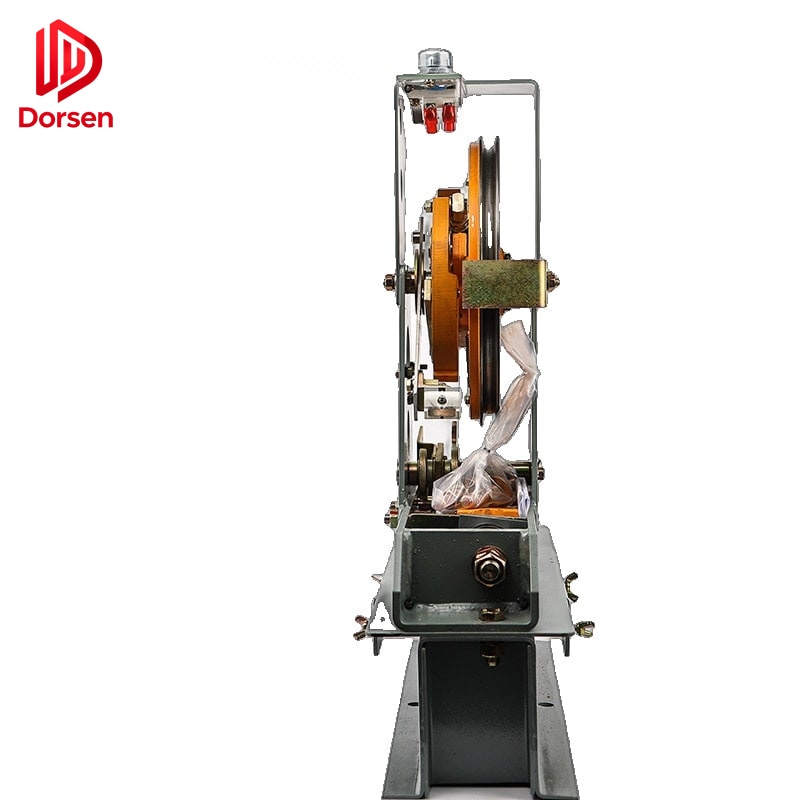


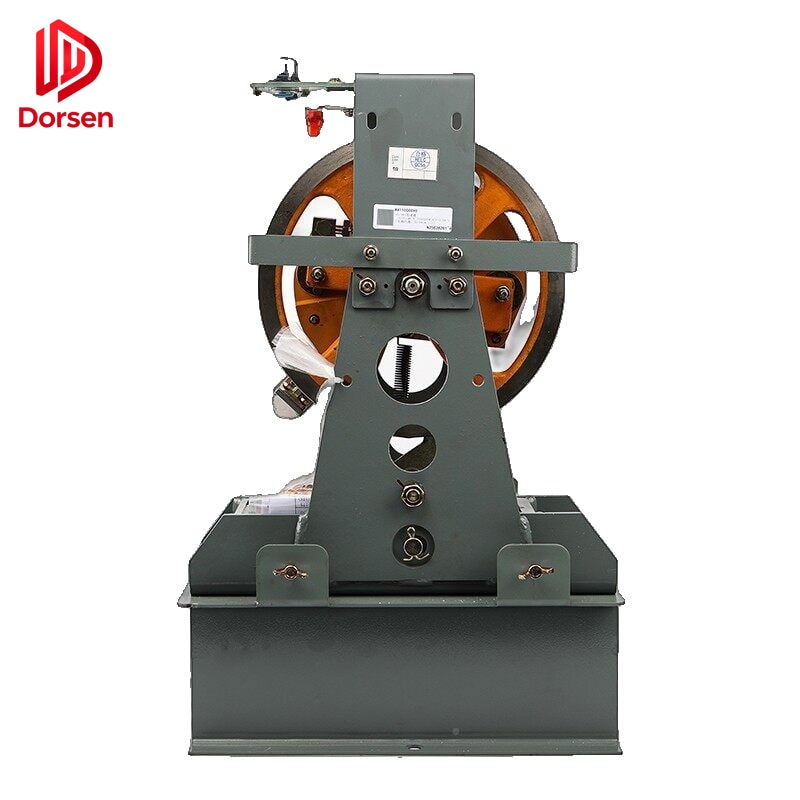
Safety gear is the mechanical braking device that arrests the elevator car if it descends at excessive speed. It is activated by the overspeed governor through a linkage system and is among the most safety-critical components in any elevator installation. Ordering safety gear by approximate size, visual similarity, or incomplete model data is one of the highest-risk procurement errors in the elevator parts industry.
Unlike consumable components such as guide shoe liners or door rollers, safety gear must function within precisely defined speed, load, and guide rail parameters certified by type examination. A unit that physically fits but operates outside its nameplate rating creates a latent safety hazard that may not be discovered until an actual overspeed event — or a failed annual safety test.
This guide provides a comprehensive procurement framework covering specification verification, documentation requirements, related components, and common compatibility failures observed in international spare parts trade.
1. Understanding the Safety Gear System
1.1 Components in the Safety Chain
The elevator safety system operates as a sequential chain:
Overspeed governor → Governor rope → Safety gear linkage → Safety gear jaws → Guide railsEach component must be matched to the others. Replacing safety gear without verifying governor tripping speed, rope diameter, and linkage geometry can produce a system that appears complete but fails to engage correctly under overspeed conditions.
1.2 Progressive vs. Instantaneous Gear
Modern passenger elevators above 0.63 m/s rated speed require progressive safety gear, which applies braking force gradually to limit deceleration (typically ≤ 1.0 g per EN 81-20). Instantaneous gear engages rapidly and is restricted to low-speed applications in most jurisdictions.
| Parameter | Instantaneous | Progressive |
|---|---|---|
| Engagement | Rapid clamp on rails | Controlled sliding deceleration |
| Speed range | ≤ 0.63 m/s (typical) | 0.63 m/s to 10+ m/s |
| Occupant deceleration | Higher jerk | Certified ≤ 1.0 g |
| Current market share | Legacy installations | All new passenger elevators > 0.63 m/s |
If you are unsure which type is installed, photograph the nameplate and send it to your supplier before ordering. Never substitute progressive for instantaneous or vice versa based on mounting dimensions alone.
2. Pre-Order Specification Checklist
2.1 Guide Rail Parameters
Safety gear jaw blocks are machined to match specific guide rail profiles. This is the most common source of compatibility failure.
| Parameter | What to verify | Common values |
|---|---|---|
| Rail model | T-profile designation | T75, T89, T127, T140 |
| Rail thickness | Working face dimension | 9, 10, 14, 16 mm |
| Rail production type | A = cold-drawn / B = machined | Must match nameplate rating |
| Lubrication condition | Oiled vs. dry rail rating | Affects friction coefficient |
| Jaw block profile | Must match rail working face | Supplier-specific geometry |
Critical rule: Do not install safety gear on guide rail types not listed on the device nameplate. Jaw block profile mismatch produces abnormal braking, incomplete engagement, or rail scoring during a safety gear test.
2.2 Elevator Operating Parameters
| Parameter | Source | Why it matters |
|---|---|---|
| Rated speed (m/s) | Machine nameplate / data plate | Determines gear speed class |
| Governor tripping speed | Governor nameplate / test certificate | Must fall within gear certified range |
| Rated load Q (kg) | Car data plate | Combined with car weight for P+Q |
| Car empty weight P (kg) | Weighing or manufacturer data | Total mass P+Q must be within capacity table |
| Installation side | Car left / car right / counterweight | Determines unidirectional vs. bidirectional gear |
The total suspended mass P + Q must sit inside the nameplate capacity table for the specific combination of speed class and rail type. Tables differ between machined (Type B) and cold-drawn (Type A) rails — using the wrong table row is a certification violation.
2.3 Safety Gear Identification Data
Collect from the existing unit before ordering:
- Manufacturer name and model number on the safety gear body
- Nameplate photo showing speed range, P+Q capacity, rail type, and serial number
- Number of jaw blocks (2, 4, 6, or 8 — scales with load)
- Directionality — unidirectional (down only) or bidirectional
- Mounting bracket dimensions — center distance, bolt pattern, ear orientation
- Type examination certificate number — for export and inspection compliance
2.4 Brand and Certification Requirements
| Market | Typical documentation required |
|---|---|
| European Union | CE declaration, type examination certificate (Module B or equivalent) |
| North America | ASME A17.1 compliance, component certification data |
| Middle East / Africa | CE or equivalent, sometimes notarized test reports |
| Southeast Asia | Mix of CE and local inspection authority requirements |
| Australia | Conformance documentation per AS 1735 |
Export shipments of safety gear without proper certification documents risk customs rejection and invalidate the component for installation under local safety codes. Confirm documentation requirements with your customer before quoting.
3. Related Components to Include in Scope
A safety gear replacement project often requires additional parts beyond the gear assembly itself. Omitting these from the quote causes installation delays and second shipments.
| Component | When required | Specification notes |
|---|---|---|
| Overspeed governor | Governor speed class does not match new gear | Tripping speed must align with gear rating |
| Governor rope | Rope worn, wrong diameter, or wrong length | Separate from main suspension ropes |
| Linkage rods and pins | Bent, worn, or missing after trip event | Exact length and pin diameter critical |
| Reset mechanism | Damaged during safety gear test | Manual or automatic reset per design |
| Floor brackets | Corroded or modified during previous service | Mounting geometry must match gear frame |
| Guide rail sections | Scored or deformed from previous trip | Replace rail at contact points after test |
After any safety gear trip or test, guide rails at the jaw contact points must be inspected for deformation or scoring. Rail replacement may be required before the elevator returns to service.
4. Common Compatibility Failures
These patterns are verified across multiple field service databases and manufacturer technical bulletins:
4.1 Jaw Block vs. Rail Profile Mismatch
Symptom: Abnormal noise during safety gear test, incomplete engagement, or visible rail scoring.
Cause: Jaw block ordered for T89/B machined rail installed on T89/A cold-drawn rail, or wrong thickness rating.
Prevention: Match rail production type letter (A or B) from the nameplate exactly.
4.2 Speed Class Mismatch
Symptom: Governor trips but safety gear does not engage, or engages with excessive deceleration.
Cause: Gear rated for 1.0 m/s installed on a 1.75 m/s system, or governor tripping speed outside gear certified range.
Prevention: Cross-reference governor tripping speed (typically 115% of rated speed) against gear nameplate speed table.
4.3 Mounting Dimension Deviation
Symptom: Gear cannot be installed without modifying the existing bracket or floor structure.
Cause: “Similar-looking” gear from a different manufacturer with different ear spacing or pin hole locations.
Prevention: Request dimensional drawing from supplier and compare to as-built measurements before ordering. Field modification of safety gear brackets is not acceptable under any code jurisdiction.
4.4 Missing Linkage Parts
Symptom: Gear installed but cannot be connected to governor rope; system cannot be tested.
Cause: Quote covered safety gear body only; linkage rods, pins, and tension spring omitted.
Prevention: Include a complete bill of materials in every safety gear inquiry.
5. Load Capacity and Jaw Block Configuration
General industry guidance for jaw block count relative to total suspended mass:
| Approximate P + Q range | Typical jaw block configuration |
|---|---|
| Up to ~1,000 kg | 2 blocks |
| ~1,000 – 2,500 kg | 4 blocks |
| ~2,500 – 4,000 kg | 6 blocks |
| Above ~4,000 kg | 8 blocks distributed on frame |
Exact block count and placement are always nameplate-driven. Use this table only as orientation during initial inquiry — the supplier must confirm against the certified capacity table for the specific model.
6. Recommended Procurement Workflow
Step 1: Photograph existing safety gear nameplate and mounting bracket
Step 2: Record rated speed, P+Q, rail model/type, and installation side
Step 3: Confirm governor tripping speed and rope specification
Step 4: Identify related components needed (linkage, rope, brackets)
Step 5: Request quote with certification documents listed
Step 6: Technical review of supplier specification match
Step 7: Order with confirmed delivery of CE/type examination documents
Step 8: Pre-installation dimensional check on arrival
Timeline note: Safety gear with export documentation typically requires 2–4 weeks lead time. Rush orders without documentation verification create compliance risk.
7. Inspection and Testing After Installation
Per EN 81-20 and ASME A17.1 practice:
| Test | Frequency | Requirement |
|---|---|---|
| Governor tripping speed verification | Annual (passenger) / 6 months (heavy freight) | ±3% of rated tripping speed |
| Safety gear test (empty car) | Annual | Car must be arrested without rail damage beyond limits |
| Guide rail inspection after test | After every test | Check for scoring, deformation at jaw contact points |
| Linkage wear inspection | Annual | Check pins, rods, and rope for wear |
| Nameplate legibility | Every inspection | Must remain readable for entire service life |
8. Information to Send for a Quote
Accurate quotes require:
- Clear photos of safety gear nameplate (all text legible)
- Guide rail model, thickness, and production type (A or B)
- Rated speed, rated load, and car empty weight
- Governor model and tripping speed if known
- Installation side (car left / car right)
- Destination country and required certification type
- Whether linkage components and governor rope are included in scope
DORSEN supplies OEM-compatible safety gear with export documentation support for international maintenance contractors and distributors. On safety-critical components, specification confirmation before payment is not bureaucracy — it is an integral part of the safety system. Send your nameplate photo for a matching proposal with certification details.