

The door can appear fully closed while the controller still sees an open lock circuit — and the car will not leave the floor. This is one of the most common “no-start” callbacks in elevator maintenance, and it is often misdiagnosed as a door operator motor failure.
Regional service data from China’s 96333 emergency platform has shown that door-system faults account for a major share of entrapment events, with lock-device issues representing more than half of door-related cases. The lesson for procurement teams: many jobs need contacts, rollers, or alignment work — not a new operator assembly.
This guide provides comprehensive coverage of door lock circuit architecture, systematic troubleshooting procedures, mechanical and electrical diagnostic methods, procurement decision frameworks, and preventive maintenance practices.
1. Door Lock Safety Chain Architecture
1.1 How the Safety Chain Works
Modern elevators will not enter running mode unless the full door lock chain reports “closed and latched.” The safety chain is a series-connected circuit of positively driven contacts that must all close before the controller enables the drive.
Typical sequence:
Hall lock contacts (each floor) → Car door lock switch → Lock relay → Controller run enableIf any contact in that chain is high-resistance or open, the car may close visually but remain electrically “not ready.” The controller interprets this as a door open condition and inhibits all running commands.
1.2 Electrical Safety Requirements
Per EN 81-20 and ASME A17.1:
| Requirement | Detail |
|---|---|
| Contact type | Positively driven — cannot fail in closed position |
| Wiring | Hardwired safety circuit — not software-dependent for lock status |
| Redundancy | Separate monitoring of lock circuit integrity |
| Contact rating | Rated for safety circuit voltage and current |
| Inspection access | Lock components accessible for maintenance and testing |
Software-based door monitoring supplements but does not replace the hardwired lock circuit in any current code jurisdiction.
1.3 Components in the Lock Circuit
| Component | Location | Function |
|---|---|---|
| Hall door lock | Each landing door | Confirms hall door is locked before car moves |
| Car door lock switch | Car door operator | Confirms car door is locked |
| Lock roller | Car door knife assembly | Mechanical engagement with hall lock |
| Lock relay | Controller or separate panel | Confirms entire chain is closed |
| Door zone switch | Car top or door operator | Confirms car is within door zone at floor |
2. Symptom Map for Systematic Diagnosis
2.1 Symptom-to-Cause Matrix
| Symptom | Likely layer | Quick test |
|---|---|---|
| Can select direction, door closes, no start | Lock chain not completing | Listen for lock relay pull-in click |
| Door reopens or hunts near closed position | Mechanical drag or misaligned lock roller | Check track debris and roller engagement |
| Problem on one floor only | Hall lock at that landing | Isolate floor lock contacts |
| Intermittent on windy or lobby floors | Lock roller not fully engaging | Measure roller-to-lock engagement depth |
| Works in inspection, not in automatic | Safety or automatic circuit branch | Compare inspection vs. auto wiring path |
| Door closes slowly then fails to start | Door operator belt slip | Check belt tension and close timing |
| Fault after door operator replacement | Wiring error or wrong lock switch | Compare to original wiring diagram |
2.2 Decision Flow
Door won't start → Is lock relay pulling in?
  → No: Lock chain open — proceed to electrical isolation
  → Yes: Problem is downstream of lock relay — check run enable circuit
Lock chain open → Is problem on one floor only?
  → Yes: Hall lock at that floor — inspect landing door lock
  → No: Car lock switch or series wiring — inspect car side
3. Mechanical Checks First
Experienced technicians follow mechanical before electrical on door calls. Industry data suggests that 60–70% of lock-related no-start faults are resolved without replacing electrical components.
3.1 Mechanical Inspection Sequence
| Step | Check | Action if failed |
|---|---|---|
| 1 | Track and sill debris | Clean — dust and small objects prevent full lock engagement |
| 2 | Lock roller engagement | Adjust or replace — insufficient bite is the most frequent cause |
| 3 | Door operator belt tension | Tension or replace — slip delays final close stroke |
| 4 | Hanger and guide shoe alignment | Adjust — binding at the last 20 mm of travel |
| 5 | Door close force and timing | Adjust controller parameters — insufficient force at end of stroke |
| 6 | Sill gap and door panel alignment | Shim or adjust — gap prevents lock point engagement |
| 7 | Hall door lock roller and latch | Clean and lubricate — corrosion prevents engagement |
3.2 Lock Roller Engagement
The lock roller on the car door knife must physically engage the hall door lock mechanism to close the electrical contact. Industry practice targets adequate bite depth into the lock point — typically verified by:
- Visual confirmation of roller seated in lock notch
- Manual push test — door should not open when locked
- Measurement of roller-to-lock engagement depth per manufacturer specification
Insufficient engagement is the single most frequent cause of “door closed but not locked” callbacks.
4. Electrical Isolation Methods
4.1 Safety Warning
Temporary shorting of safety circuits is sometimes used in the field for isolation, but it must never be left installed. Every jumper must be removed before returning the unit to automatic service. Leaving a safety jumper in place bypasses a critical protection layer and creates a latent hazard.
4.2 Resistance Method (Power Off)
With the controller locked out and verified zero voltage:
| Step | Action | Expected result |
|---|---|---|
| 1 | Disconnect lock chain at controller terminals | Isolate from controller |
| 2 | Measure continuity through hall lock contacts floor by floor | Closed circuit at each floor with door locked |
| 3 | Measure car door lock switch continuity | Closed when door is locked |
| 4 | Measure series wiring between documented terminals | No open circuits, resistance < 1 Ω per contact |
An open or highly resistive segment narrows the search to one landing or one switch assembly.
4.3 Voltage Method (Controlled Test)
With qualified personnel and proper PPE:
| Step | Action | Expected result |
|---|---|---|
| 1 | Enable controller with doors manually locked | Lock circuit voltage present |
| 2 | Measure voltage at each floor lock contact | Voltage present at each closed contact |
| 3 | Identify last point with expected voltage | Next segment is the open branch |
| 4 | Verify lock relay coil voltage | Relay should pull in when chain is complete |
The last point that fails to show expected potential identifies the open branch.
5. Door Operator vs. Lock Hardware: Procurement Decision
5.1 Cost Comparison
| Root cause | Typical part cost | Labor |
|---|---|---|
| Oxidized lock contact | $20–$80 | 30 minutes |
| Worn lock roller | $30–$100 | 1 hour |
| Misadjusted closing limit switch | $0 (adjustment) | 30 minutes |
| Failed lock relay | $50–$150 | 1 hour |
| Complete door operator assembly | $1,500–$5,000+ | 4–8 hours |
A common and costly mistake is ordering a complete door operator when the root cause is a $50 contact set or a 30-minute roller adjustment.
5.2 Before Quoting a Door Operator Assembly
| Item | Why it matters |
|---|---|
| Full operator MODEL and assembly P/N | Avoids wrong motor or hanger shipment |
| Door type (center / side opening) | Mounting and linkage differ |
| Door width in mm | Linkage length varies |
| Whether lock components were already replaced | Prevents duplicate parts on site |
| Fault diagnosis summary | Confirms operator vs. lock issue |
6. Preventive Maintenance Program
Maintenance programs that cut lock-related entrapments typically include:
| Task | Frequency | Benefit |
|---|---|---|
| Clean lock points and tracks | Quarterly in high-traffic lobbies | Prevents engagement failure |
| Verify lock roller wear | Every maintenance visit | Catches wear before failure |
| Check door close timing | After seasonal temperature changes | Thermal expansion affects clearances |
| Measure lock contact resistance | Annual | Detects oxidation before failure |
| Document repeat-call floors | Ongoing | Pattern data beats random part swaps |
| Lubricate hall door lock mechanisms | Semi-annual | Prevents corrosion binding |
6.1 Seasonal Considerations
Temperature changes affect door clearances:
| Season | Effect | Adjustment |
|---|---|---|
| Summer (expansion) | Doors may bind — incomplete close | Reduce close force or adjust clearances |
| Winter (contraction) | Increased sill gaps — lock may not engage | Shim sills or adjust lock roller position |
| Humid conditions | Contact oxidation accelerates | Increase contact cleaning frequency |
7. When a Door Operator Part Is Actually Needed
Replace or quote operator sub-assemblies when:
| Condition | Verification method |
|---|---|
| Motor draws voltage but does not develop torque | Measure current at motor terminals during commanded close |
| Hanger or coupling damage is visible | Visual inspection |
| Control board reports operator-specific faults | Fault code after lock chain is proven good |
| Repeated mechanical close force is insufficient | Clean tracks verified, belt tension correct |
| Door open/close timing cannot be adjusted within range | Controller parameters at limits |
Send nameplate photos, door width, opening type, and fault description for specification confirmation.
8. Related Components in Door System Procurement
| Component | When to order | Specification data needed |
|---|---|---|
| Door lock contact set | Oxidized or worn contacts confirmed | Contact rating and mounting type |
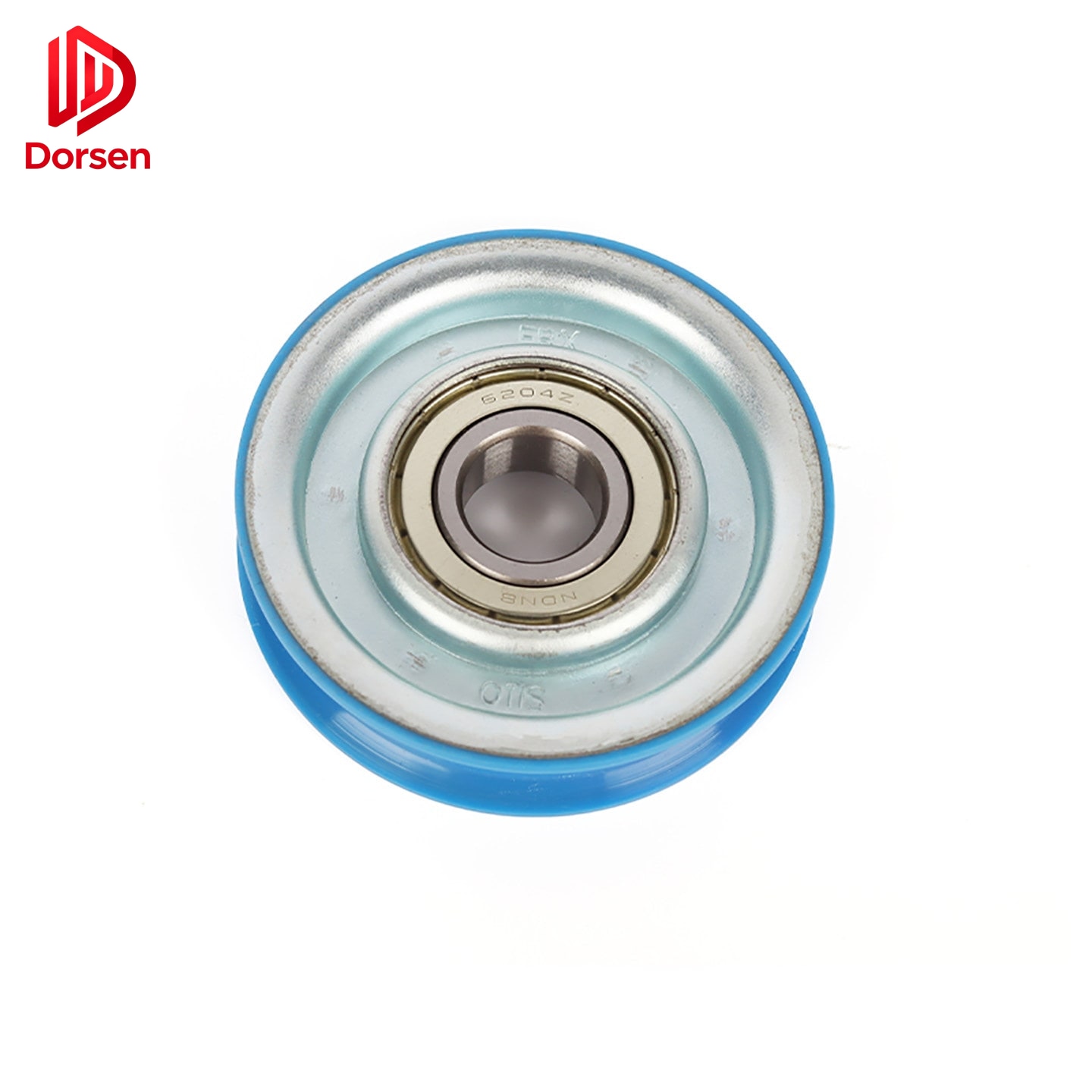
| Lock roller | Worn or cracked roller | Diameter and shaft size |
| Door knife / vane | Bent or wrong engagement depth | Knife P/N and door width |
| Door belt | Stretched or broken | Length and tooth profile |
| Closing limit switch | Failed or misadjusted | Switch type and mounting |
| Door operator motor | Confirmed motor failure | Operator nameplate P/N |
DORSEN supports maintenance contractors with OEM-compatible door operators, hangers, door knives, lock contacts, and door rollers — with pre-shipment spec checks to reduce wrong-part deliveries.