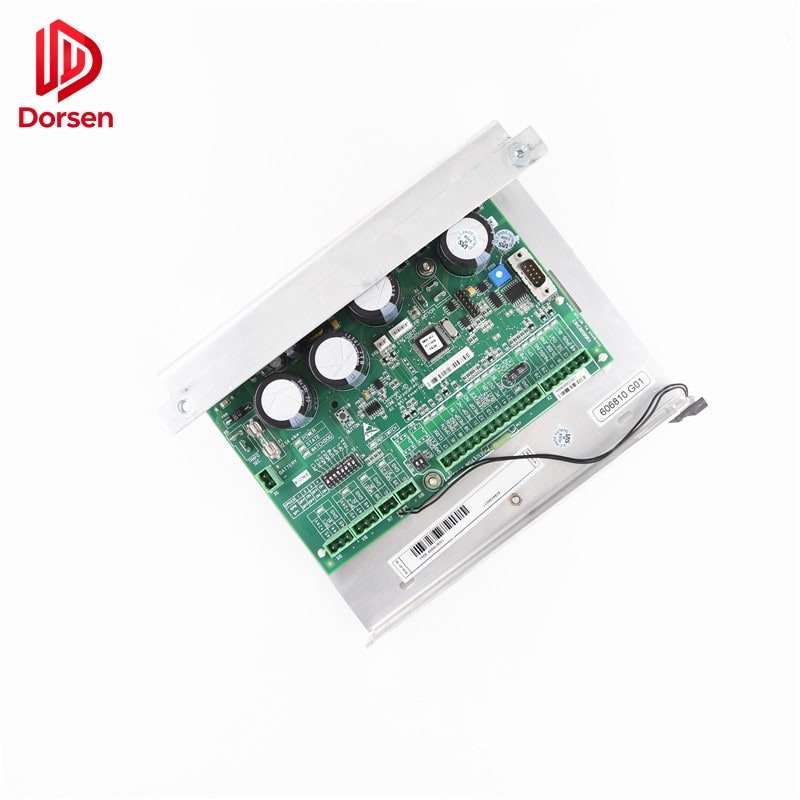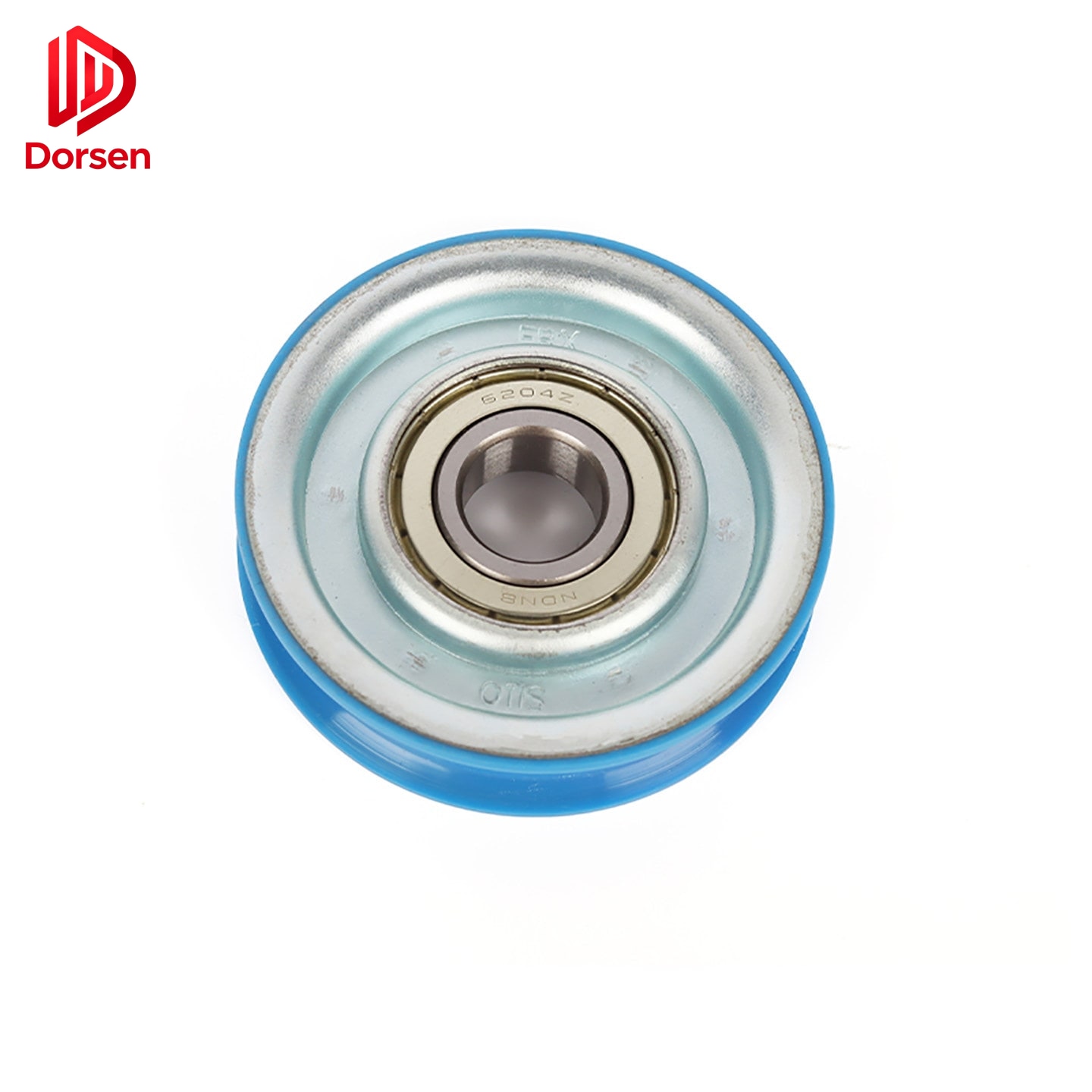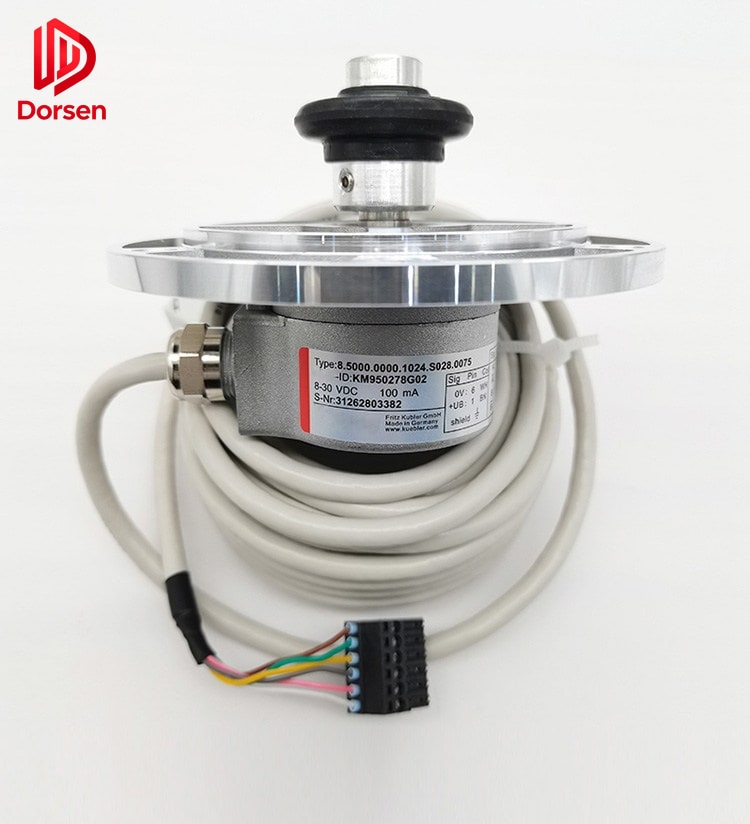


When work orders say “encoder fault” or “leveling keeps getting worse,” crews sometimes replace the feedback device more than once — and the symptom returns. The more common root cause is mechanical: uneven load share among suspension ropes, relative slip in the sheave grooves, and sheave rotation that no longer matches car travel.
Public continuing-education material (Elevator World, Koshak, 2021) and Chinese periodic-inspection case writing both link machine-room metal dust with out-of-limit tension spread. This guide is written for maintenance and spare-parts procurement: mechanics first, electronics second. Figures below are restated from public cases in our own wording — not a reprint; field decisions follow measured data and local rules.
1. Suspension Rope Systems in Traction Elevators
1.1 How Ropes Transfer Power
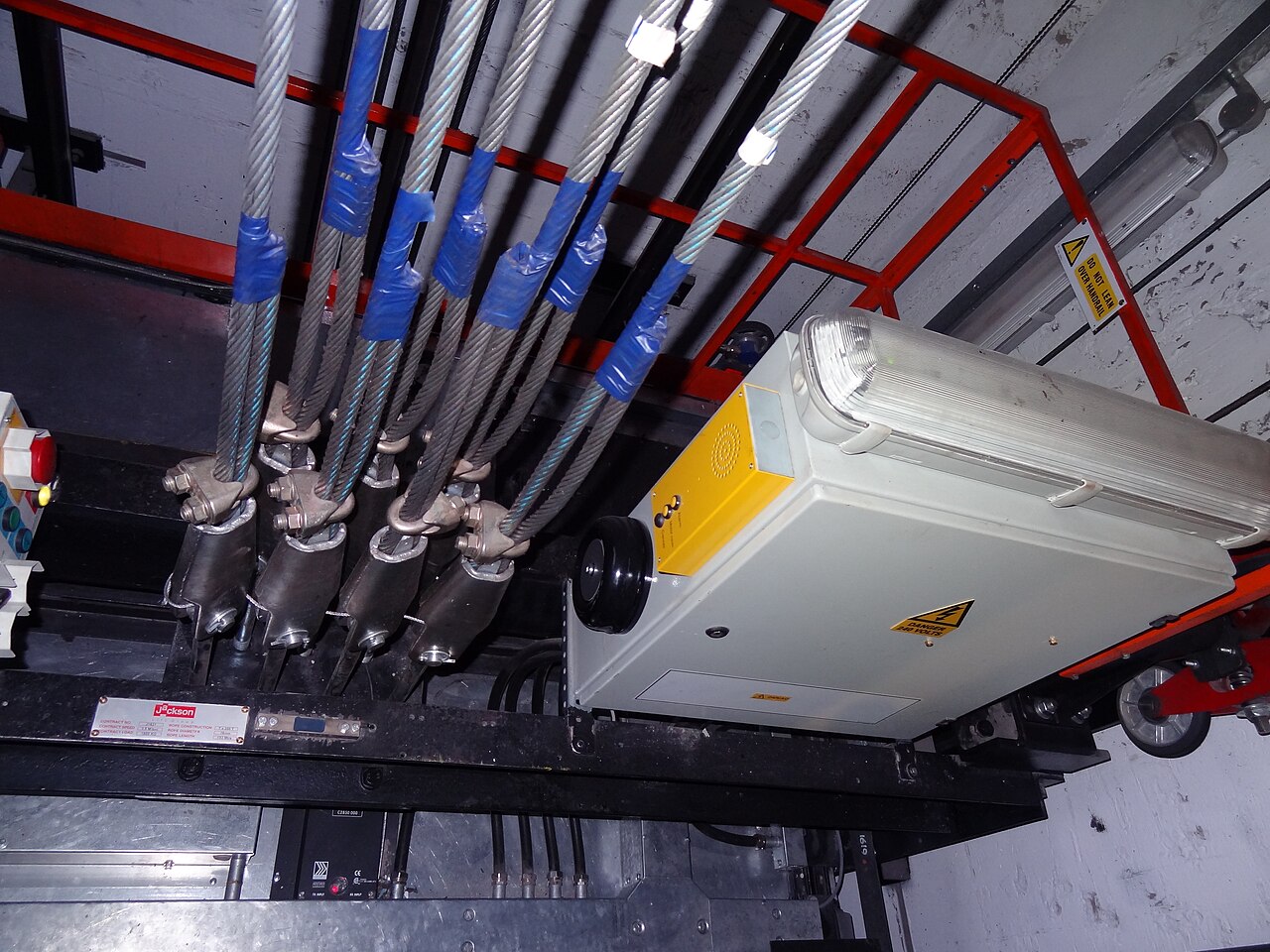
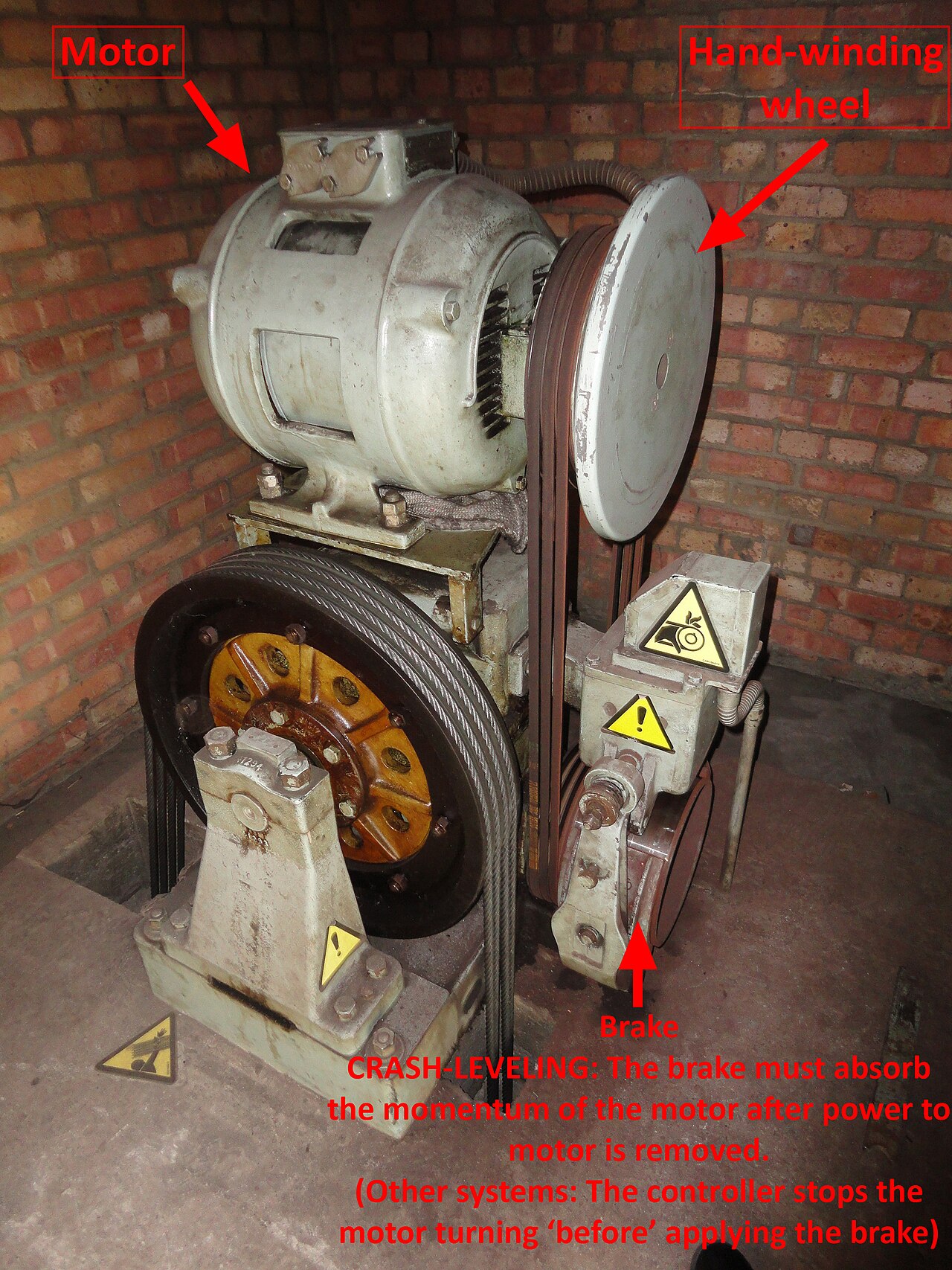
Traction elevators hang the car and counterweight from a motor-driven sheave using steel wire ropes or belts. Power is friction: ropes seat in grooves, the sheave turns, the car moves. The counterweight is typically car weight plus about 40–50% of rated load to balance the system and cut running torque.
Geared machines often use 4–6 ropes in a set. Each rope should carry a similar share. Chronic overload on one path wears that groove first, then allows hard-to-see relative slip — and the position loop starts to “look like bad feedback.”
1.2 Rope Construction and Wear Mechanisms
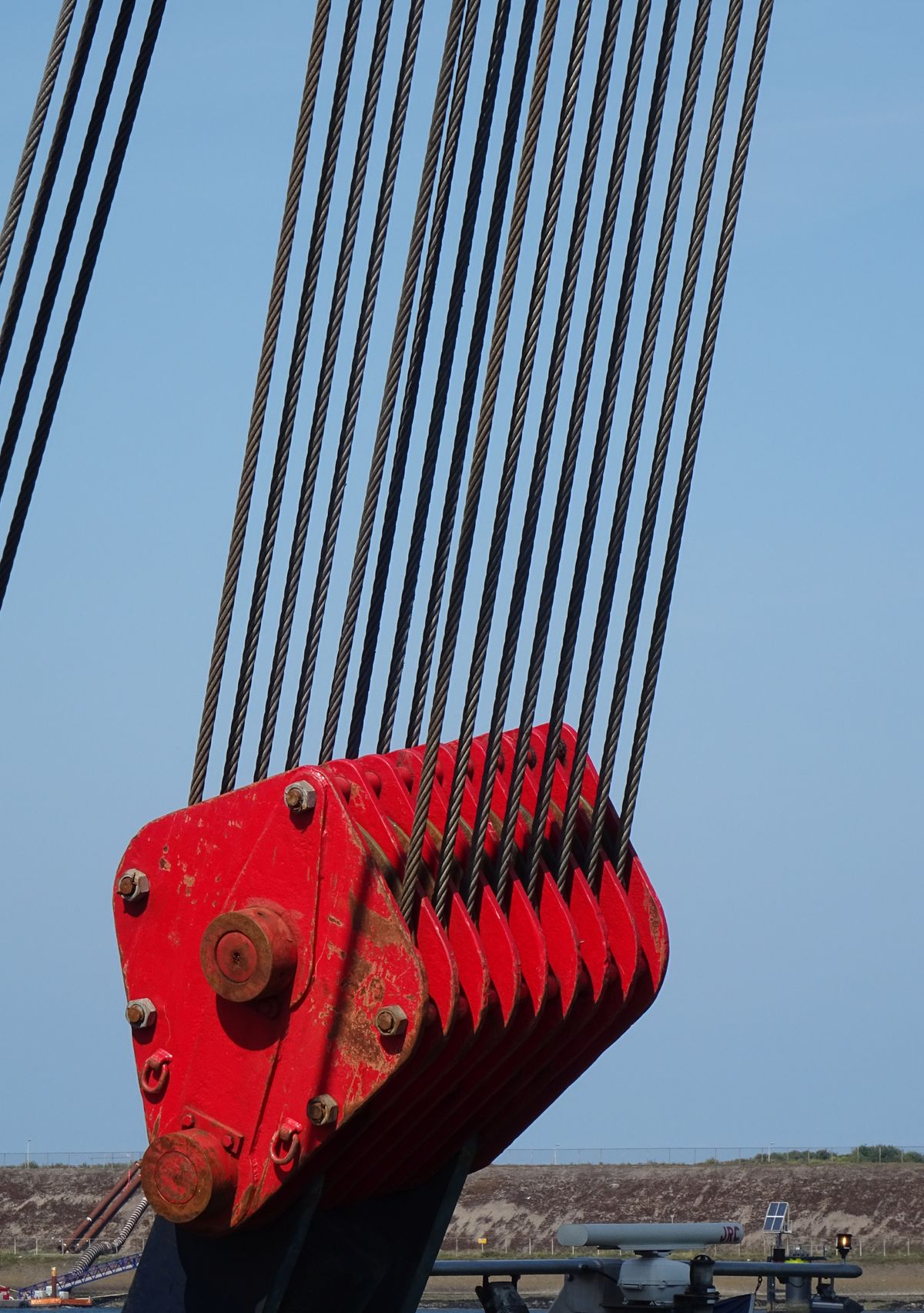
Elevator ropes are usually high-carbon strands with a fiber or steel core. Common field checks:
| Parameter | Method | Typical discard cue |
|---|---|---|
| Diameter | Caliper, multiple points | > 10% below nominal |
| Broken wires | Count per lay length | Per maker and code |
| Core | Probe / bend | Collapse or corrosion |
| Lay distortion | Visual | Birdcage, kink, flat |
| Lubrication | Look and feel | Dry, cracked, dirty |
Smaller diameter raises unit pressure in the groove; wear then promotes more slip — a feedback loop.
2. Equal Tension Requirements
2.1 Code Definition
ASME A17.1 / CSA B44 equal tension for a suspension set can be summarized as:
The lowest measured tension in the set stays within 10% of the highest.
European jobs usually mirror this under EN 81-20. It is a maintenance and inspection obligation, not a “close enough” preference.
Published telemetry cases show in-service spreads on the order of 500 lb (~227 kg) while metal dust already sits under the machine — several times wider than a 10% band.
2.2 Static vs. Dynamic Measurement
| Method | When | What you learn |
|---|---|---|
| Static | Car at a landing | Resting share |
| Dynamic | Full run | Load shift in accel/decel |
| Telemetry | Continuous | Per-rope time series and transients |
A single stop measurement can miss imbalance that appears only under acceleration. High-cycle commercial cars increasingly need full-run logging to explain “equalized, then drifts after a few trips.”
2.3 Tools
- Mechanical rope gauges — deflection under known force; field accuracy often ~±2.5%
- Electronic meters — load cells; finer accuracy, need calibration
- Telemetry — permanent per-rope sensors and thresholds
- Straightedge + feelers — when tension will not hold, compare crown / groove relative difference
3. How Unequal Tension Creates “Encoder-Like” Faults
3.1 Slip Mechanism
When one rope stays overloaded in travel:
- Its groove wears preferentially
- Micro-slip appears between rope and sheave
- Encoder or tape still counts sheave rotation, not true car displacement
- Controllers log speed or position faults as error grows
The feedback device may be healthy — it reports rotation faithfully. Rotation is no longer car travel, so a new encoder does not fix it.
3.2 Overlap With True Encoder Failure
| Symptom | Points to rope slip | Points to true encoder failure |
|---|---|---|
| Leveling worse over weeks | Yes | Possible, often more abrupt |
| Intermittent drift on long runs | Yes | Possible (noise) |
| Return-to-terminal after large error | Yes | Yes (lost pulses) |
| Metal particles near sheave | Strong cue | Usually unrelated |
| Two shaft-learns differ > 3 mm | Yes | Yes — check both |
| Sin/Cos voltage imbalance | No | Yes |
Practice: if any floor differs by > 3 mm on two shaft-learn runs, verify electrical feedback integrity and rope slip before ordering parts.
3.3 Chalk Mark Test
- Mark rope against sheave at one landing
- Run one floor up and return
- Measure mark drift
Many crews accept < 5 mm single-floor drift empty and loaded. Larger drift → treat as slip, measure tension, delay electronics.
4. Field Evidence: Particles Mean Act Now
4.1 China inspection case: ropes still “in limit,” filings already present
Periodic inspection practice supports “dust and diameter spread before encoder swap.” A China Elevator analysis (Zheng Xinyong, Fujian Special Equipment Inspection and Research Institute, 2021) described a recurring residential pattern:
| Item | Field data |
|---|---|
| Rated load | 1000 kg |
| Stops | 33 / 33 |
| Travel | ~109.2 m |
| Ratio / speed | 2:1 / 2 m/s |
| Nominal diameter | 10 mm |
Across several cars in one batch:
- Bright working faces on individual ropes; filings or dust near the sheave
- Wide-jaw caliper: one rope ~9.54 mm, others ~9.72–9.76 mm
- Most ropes still short of mandatory diameter discard — yet uneven wear and dust already showed unequal share
Implications:
- “Ropes can still run” ≠ “system is healthy”
- Encoder / leveling callbacks → equalize and chalk-test first
- Log dust, bright ropes, and in-set diameter spread for later sheave/rope decisions
(Summarized from China Elevator 2021 Vol. 32 No. 8; apply measured data and local rules.)
4.2 High-cycle overseas contrast: public CE case
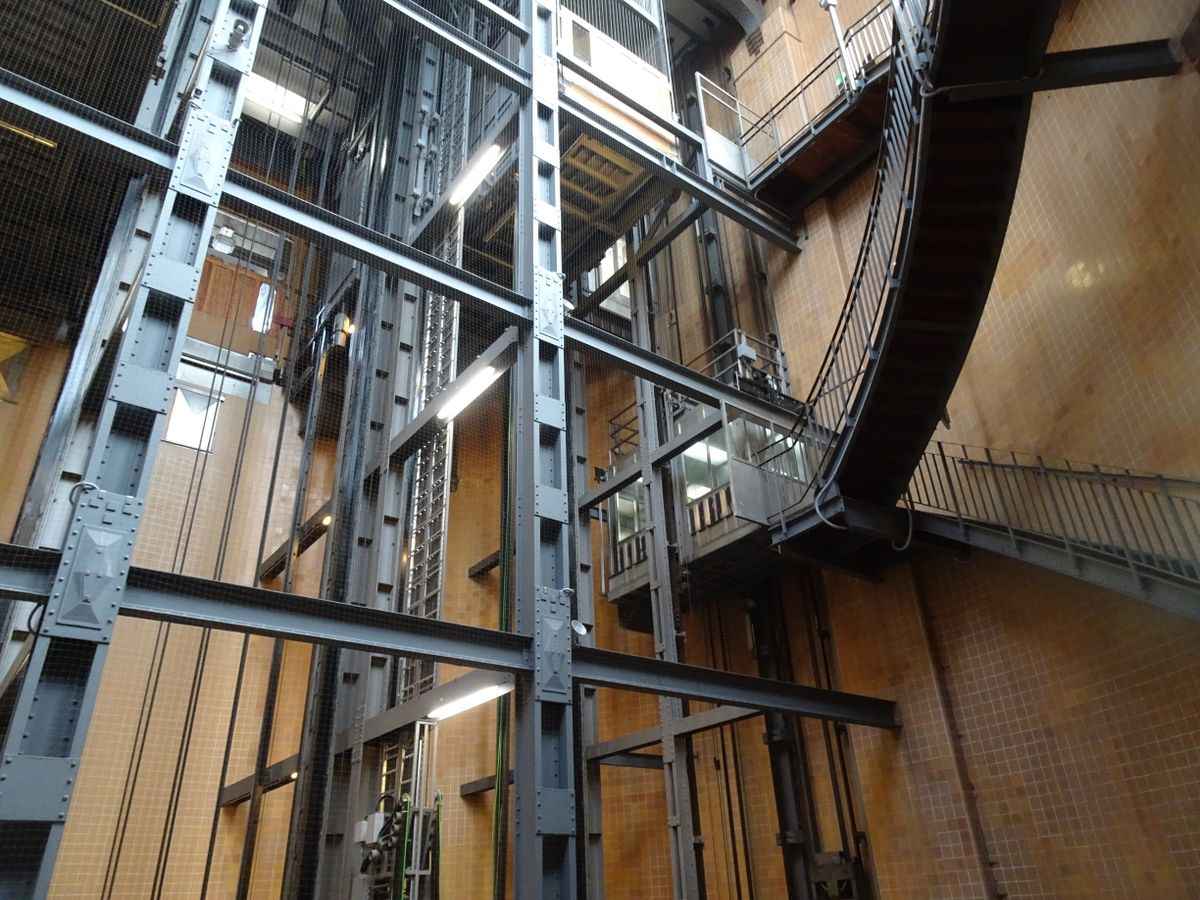
A second widely cited data set comes from Elevator World’s 2021 continuing-education article (Koshak). Below we keep verifiable duty and magnitudes only, rewritten in our procurement/maintenance voice — not the source’s section order or phrasing.
| Item | Case order of magnitude |
|---|---|
| Machine | Geared traction, one car in a triplex |
| Age | ~seven years |
| Speed | ~1.75 m/s |
| Stops | ~11 (front only) |
| Daily trips | ~1700 |
| Ropes | 5, with per-rope dynamic monitoring |
What crews can take away:
- Clear steel wear debris near the counterweight-side pinch on that car only; sibling cars on the same duty lacked the same pile-up
- Cost and responsibility debates about sheave replacement appeared before tension/wear root-cause work
- Once per-rope monitoring was live, imbalance alerts were relentless; widening the alarm band far past code still did not silence them — while the code target band is 10%
| Condition | Approximate readings | vs. 10% target |
|---|---|---|
| Constant speed | ~700–1200 lb, ~500 lb spread | Clearly over |
| At rest | Peak ~1070 lb, ~333 lb spread (~31%) | Fail |
| Instant in run | ~1200 vs ~680 lb (~40%+ spread) | Invisible to a single stop check |
Useful conclusions for readers of this site:
- See wear debris → equalize first; do not start with encoder orders or materials lawsuits
- Pass at rest ≠ pass in motion; dynamic imbalance explains many “won’t stay equalized” jobs
- If gauges are doubted, swap sensors across ropes and re-run to separate instrument error from load share
- If classic shackle work keeps bouncing, measure relative rope diameter / groove depth (straightedge across crowns + feelers) and plan regroove or sheave change
- Normal code creep does not grind filings; magnetic particles imply slip with loss of reliable traction
- Put rope diameter and groove depth on the MCP at least yearly; long gaps after turnover are a common backdrop for early sheave loss
Domestic inspection and high-cycle overseas data agree: dust is an early signal, not an end-stage signal.
(Public CE summary only; this site does not copy source figures, equations, or long wording. Magnitudes are for comparison — act on site measurements and applicable code.)
4.3 Maintenance Rule
Any visible grinding debris near the driving sheave → measure and equalize tension immediately — electronics orders wait.
Particles are not cosmetics: they mean steel-on-steel grinding at the rope–groove interface, and every extra trip removes more material until load share or groove geometry is corrected.
5. Rope Tension Verification Workflow
5.1 Steps
- Visual check for metal particles at sheave pinch points
- Measure dynamic or static tension on every rope in the set
- Compare highest vs. lowest
- Equalize into the 10% band if over limit
- Confirm anti-rotation hardware
- Re-run and compare two shaft-learn passes
- If 10% cannot be held, inspect groove depth and rope diameter
- Plan regrooving or rope/sheave replacement when wear exceeds limits
5.2 When 10% Cannot Be Achieved
- Multi-point diameter vs. discard criteria
- Groove profile and depth gauges
- Regroove if maker data and remaining depth allow
- Otherwise schedule sheave and/or rope change
- Document for the owner — delay raises total cost
Industry consensus is not that rope steel “suddenly got brittle”; skipped tension maintenance remains one of the most preventable drivers of early sheave damage.
6. Anti-Rotation Devices
Anti-rotation hardware at the hitches limits twist and uneven strand loading. Axial rope rotation spreads load poorly, speeds wear, and lets tension drift.
Under ASME A17.1 and EN 81-20 related requirements, when retensioning or replacing ropes:
- Confirm a compliant device on every rope
- Inspect deformation, damage, missing parts
- Replace units that no longer work under load
- Match device type to the current code edition
Tension that “comes back” weeks later often traces to missing or failed anti-rotation parts.
7. Sheave Groove Maintenance
7.1 Groove Wear Measurement
| Check | Tool | Accept / reject |
|---|---|---|
| Depth | Depth / radius gauge | Maker minimum |
| Profile | Contour gauge | Required shape held |
| Surface | Visual | Deep scoring → replace tendency |
| Rope seat | Visual | Should seat on groove bottom |
Worn grooves cut friction; even perfect tension may not hold traction.
7.2 Regrooving vs. Replacement
| Factor | Regroove | Replace |
|---|---|---|
| Remaining depth | Must stay above minimum after cut | New sheave |
| Material | Must allow remachining | New hardened face |
| Cost / downtime | Lower / hours | Higher / half-day class |
| Rope match | May need new ropes | New ropes recommended |
8. Annual Maintenance Program Integration
Suggested MCP tasks:
| Task | Minimum frequency | Notes |
|---|---|---|
| Tension check / adjust | Yearly (more on high-cycle) | Calibrated gauge |
| Rope diameter | Yearly | 3+ points per rope |
| Groove measure | Yearly | vs. maker limits |
| Anti-rotation inspect | Every rope service | Replace if damaged |
| Encoder coupling check | Every drive-related visit | Slip unrelated to ropes |
| Particle visual | Every machine-room visit | Act if found |
Treat rope and feedback as one system to cut repeat callbacks and wrong part orders.
9. Procurement Angle for Parts Suppliers
Before processing encoder orders for repeat position faults, ask:
| Question | If “no” — recommend first |
|---|---|
| Tension inside 10%? | Measure and equalize |
| Metal dust in the room? | Sheave / groove inspect |
| Two shaft-learns differ > 3 mm? | Check slip and feedback together |
| Chalk slip test done? | Do it before the part order |
| When were ropes last equalized? | Review history |
A correct encoder cannot cancel ongoing traction slip. Parts without diagnostic context create repeat orders and warranty noise.
10. Related Components and System Thinking
| Component | Link to rope tension |
|---|---|
| Traction sheave | Direct wear partner |
| Encoder / feedback | Reports sheave turns, not car position |
| Equalizing hardware | Holds tension balance |
| Compensation / hitches | Affect load share |
| Governor rope | Separate system; same tension ideas apply |
DORSEN supplies encoders, traction sheaves, wire ropes, and tension-related tools for maintenance contractors. Clear the mechanical foundation, then match the part.
FAQ
What should I do first if I see metal dust near the traction sheave?
Measure and equalize suspension-rope tension in the set, and log dust location plus diameter spread. Do not treat “encoder fault” as the first action. Dust is usually an early sign of abnormal grinding at the rope–groove interface.
What is the ASME equal-tension expectation for hoist ropes?
ASME A17.1 / CSA B44 summarizes equal tension as lowest measured tension within 10% of the highest in the set. Verify anti-rotation devices when checking or adjusting. European projects also follow EN 81-20. Use the applicable edition and local rules on site.
Why can poor leveling appear when the encoder is fine?
With rope slip, the encoder may still report sheave rotation correctly while rotation no longer equals car travel, so the controller logs position/speed faults. Combine chalk tests, tension checks, and electrical signal checks before repeat feedback swaps.
What if I cannot get tension into the 10% band?
Inspect rope diameter and groove depth/profile. Large relative differences call for regrooving or sheave/rope replacement, with written owner communication on cost and downtime. Endless shackle turning alone rarely fixes it.
What should I confirm before quoting an encoder?
Confirm tension is inside 10%, whether machine-room dust is present, whether two shaft-learn runs differ by more than about 3 mm, whether a slip test was done, and collect the original encoder model plus clear nameplate photos. Do not order feedback alone while mechanical causes remain open.